
Tracing Former Lunenburg Owners
A Lunenburg County deed chain grows one recorded transfer at a time. The newest deed names the current owner of record. Search that name as a grantee in the earlier index. That search turns up the prior deed. At each step, write down the instrument date, the grantor and grantee exactly as written. Also note the deed type, the Clerk's deed book and page reference, and the full legal description of the parcel. Those details keep the chain honest. The table below shows what to collect at each link. It does not trace a specific Lunenburg County property.
| Transfer date | Grantor to grantee | Deed type | Book/page or instrument |
|---|---|---|---|
| Date printed on newest deed | Current grantor to grantee | Type shown in the filing | Exact Clerk reference |
| Date on cited prior deed | Earlier grantor to prior grantee | Type from prior filing | Reference carried forward |
| Earlier date, if found | Next grantor to grantee in the chain | Instrument as indexed | Exact book or image citation |
For current-to-prior tracing, plug the last grantee back into the grantee index for the earlier period. Always match the land description too. A same-name filing is not a former owner of this property until the parcel details line up.
| Source | Years It Covers | Where Held | What It Shows |
|---|---|---|---|
| Lunenburg SRA land index | Earliest online year not published | Circuit Clerk and SRA | Indexed land instruments, subject to local coverage |
| Deed Book 16 | 1790–1795, identified in an LVA award list | Library of Virginia finding-aid lead; verify custody | Historic deed-book reference |
| Free-Black tax lists | 1802–1810 | LVA/ARVAS finding aid | Abode, sex, and trade or occupation |
| Requisition and Civil War claims | 1862–1868 | Library of Virginia collections | Property-adjacent historic evidence, not deeds |
Start any modern Lunenburg County transfer with the Clerk of Circuit Court. Confirm the oldest online deed year before concluding the chain ends there. For earlier decades, ask the Clerk about deed books, grantor-grantee indexes, plats, and land books. Ask as well about transferred court files. Archive records supply context. The deed or the plat still provides the legal link. It anchors the chain to a modern Lunenburg County parcel.
Lunenburg's Unknown Online Cutoff
Lunenburg County's official web pages do not name the earliest deed year searchable through SRA. The statewide SRA description says local clerks control index and image access. It gives no Lunenburg cutoff. Treat the starting year as an open question. Never borrow an assumed date from a neighboring circuit. Ask the Clerk a few direct questions. Is the grantor-grantee index searchable remotely? What year does it begin? Are older deed books scanned? Which period needs a courthouse terminal or an archive request? Also ask whether the index and image ranges differ, because they often do. If a deed reference vanishes at a cutoff, carry its book and page straight to the Clerk instead of abandoning the Lunenburg County property search.
Walking Back Through Lunenburg Deeds
Begin with the newest Lunenburg County deed that describes the tract. Read it closely. Note the grantor, grantee, date, and deed book and page. Also record any instrument number and any reference to a prior conveyance. Then search that grantor as a grantee in the earlier period. Repeat the process, checking the legal description at every link. The chain can branch. This happens when a parcel was divided, combined, or conveyed through more than one instrument.
- Locate the newest deed for the legal description and record its grantee.
- Use the deed's grantor and cited prior deed to identify the earlier search.
- Search that prior grantor as grantee, then compare the tract and adjoining calls.
- Repeat until the online run ends, then ask for the next physical or archived volume.
- Grantor and grantee
- The parties named as transferring and receiving an interest.
- Chain of title
- The sequence of instruments traced for one tract.
- Legal description
- The deed or plat language that identifies land more steadily than an address.
- Reverse index
- A search that follows a grantee back to the grantor who conveyed to them.
Deed Book 16 and Lunenburg History
Lunenburg County formed from Brunswick County in 1746. Searches before that year may lead into Brunswick records or colonial land-grant and patent files. The Library of Virginia's preservation award list identifies Lunenburg County Deed Book 16. The volume is dated 1790 to 1795. That volume is a concrete lead. It does not confirm the full book run, current custody, or digitization. So ask the Clerk and LVA to identify the right volume and index for a tract. Use the names and deed references from the modern chain. Walk back through the book this way. If the legal description shifts, check plats, survey books, road orders, and adjoining owners. A name in an archive catalog is not a parcel owner of record. It only becomes one when the land description ties it to the property. The Library of Virginia catalog and its Lunenburg County finding aids help identify historic holdings.
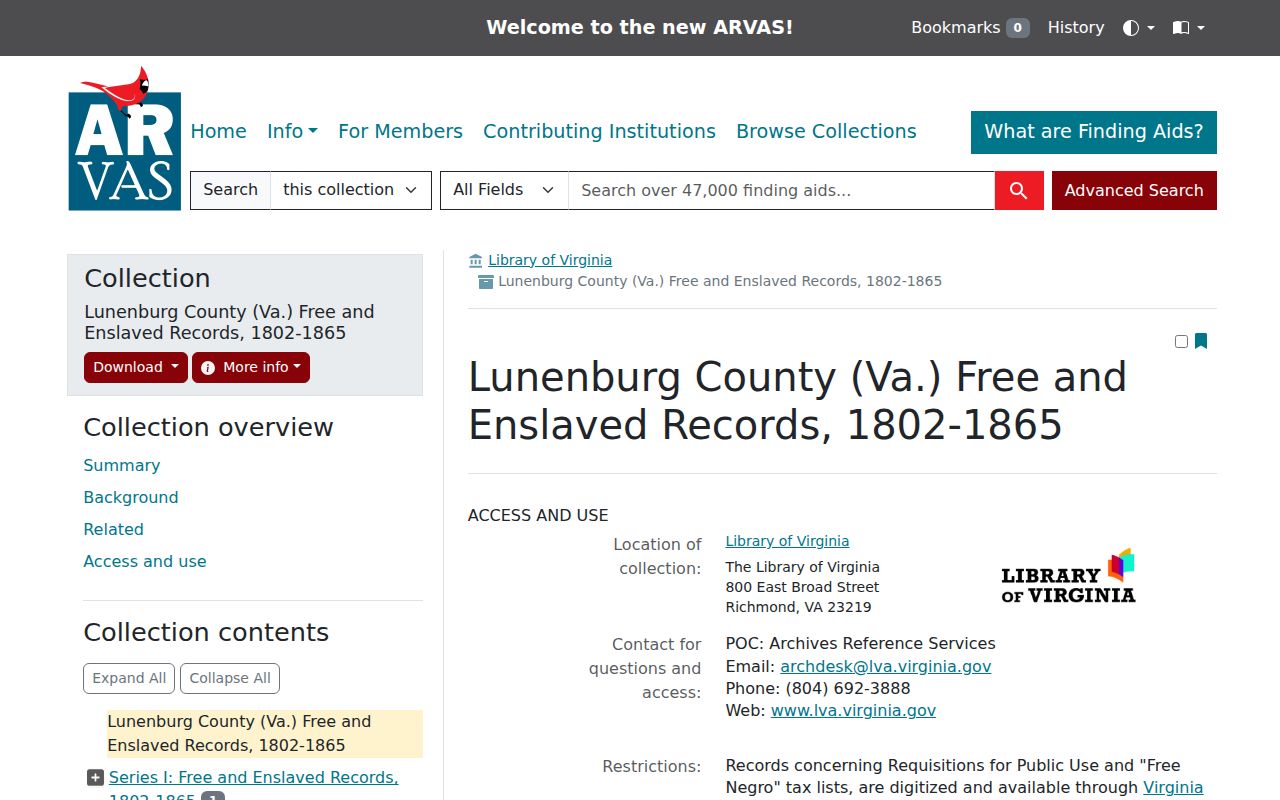
A finding aid locates a collection; only a recorded deed or plat supplies the legal property link.
Historic Lunenburg Tax Evidence
The LVA and ARVAS Lunenburg County finding aid describes free-Black tax lists from 1802 to 1810. It also covers requisition records from 1862 to 1865, an 1825 sale account, and Civil War claims from 1865 to 1868. The tax lists may record abode, sex, and trade. These records can place a former household near a tract. They can also explain a gap in a family history. They cannot replace a deed. Use the collection to generate a name, place, or date lead. Then return to land books, deeds, plats, and court papers to test the connection. A historical tax entry may describe someone who lived beside a Lunenburg County property. That person may never have owned it. Keeping an abode clue apart from a recorded conveyance protects the accuracy of the deed chain. The Lunenburg ARVAS finding aid describes the local collection and its date spans.
Plats in a Lunenburg Ownership Trail
A plat shows how a tract was divided. It becomes the tiebreaker when the words in one deed no longer match a later description. Search the Circuit Clerk's plat index by subdivision, lot, grantor, or the book reference named in a deed. Older plats may sit close by. Survey books, land books, and road orders may instead be held locally, transferred to the Library of Virginia, or described in a catalog. Ask the Clerk which custody applies. A plat carries the most weight when the deed itself cites it and the lot or tract calls line up. A modern parcel polygon only shows the general place. It cannot bridge an older conveyance on its own. Keep each former owner of record's instrument reference beside the legal description used at that time.
Estate Transfers in Lunenburg
A death can split the former-owner trail into probate, heirs, an executor, or an administrator. The will states who was meant to inherit. What actually moved the land may be a fiduciary deed, court order, partition, or heir conveyance. It appears in the deed chain. Search the probate file and deed index separately. Use the decedent's name, an approximate date, the fiduciary, and the parcel description as your handles. Some court material stays sealed or protected.
When a deed names an executor or administrator, note the capacity. Also note the order or estate file it cites. Then follow the grantee or heir. A death certificate can identify the person, but it does not prove land passed to a particular heir. The Virginia Department of Health local vital-record route covers application steps and fee links for certificates.
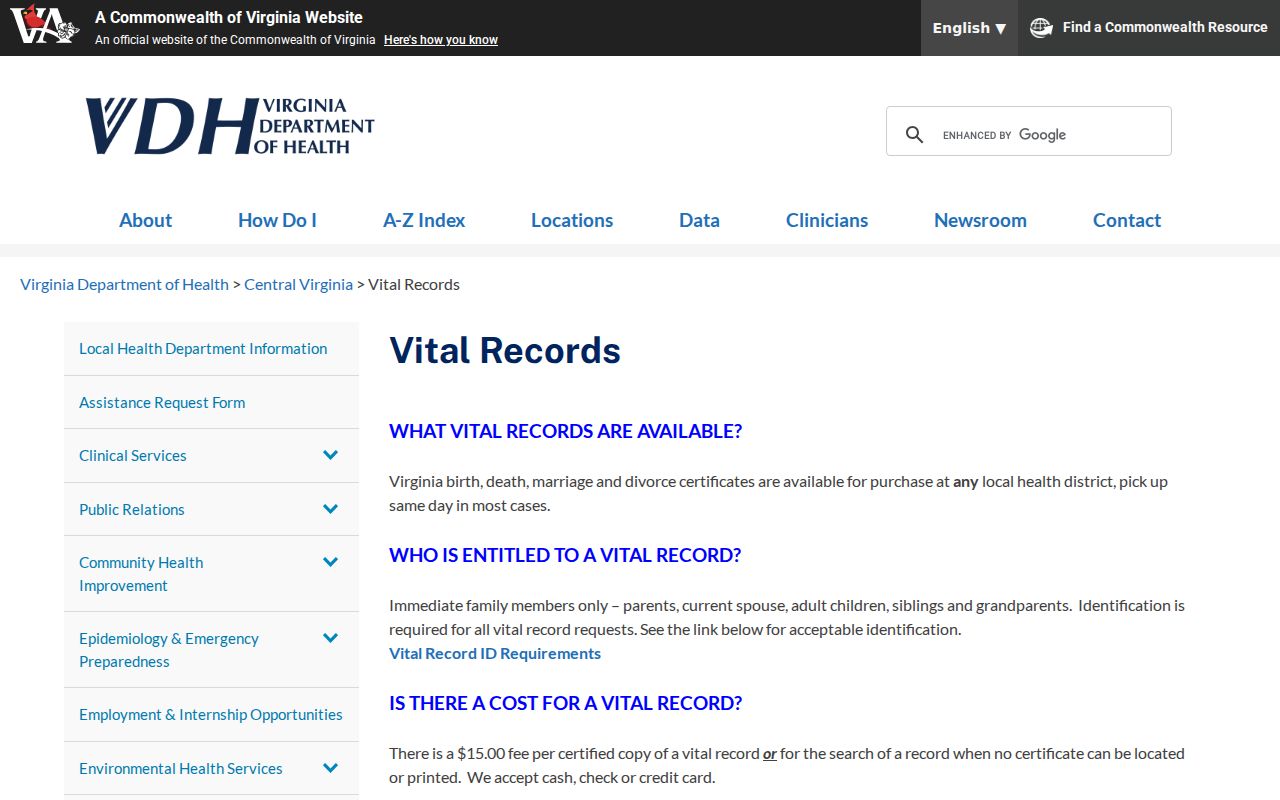
A vital record may help identify someone in an estate trail, but it never transfers land. The probate file and the recorded conveyance are what establish the property link in Lunenburg County.
Old Roads in Lunenburg Deeds
Former owners grow hard to trace when an address, route, or town label changed. Rural Lunenburg deeds often describe acreage, a survey, a watercourse, or adjoining owners. They may name no street number at all. Treat an old address as a clue only. Compare the tract description and any prior instrument reference. Then lean on plats or road orders to bridge shifts in the mapped landscape. Victoria and Kenbridge charter language can explain older town-lot or boundary references. It still does not replace the county deed index. A postal label alone does not prove a parcel lay within a town. Nor does it fix the parcel inside the corporate boundary at the time of transfer. Keep the year and the corporate boundary in view. The trail runs backward more cleanly that way.
How Far Lunenburg Ownership Records Reach
The Clerk's office publishes no stated start year for the online deed index. No courthouse fire or complete lost-record event marks the county's past. So the earliest search result is not the beginning of Lunenburg ownership history. Ask which books and indexes are online. Ask which are scanned. Ask which require courthouse or archive work. For pre-1746 land research, continue into Brunswick and colonial land-grant sources. Former owners also surface in tax lists, probate, court orders, newspapers, and historical maps. Those sources add context to the chain. Still, only a deed book, plat, or court instrument connects a person to the land. Lunenburg County's history runs long, and the online index is one access channel among several.
Lawful use. Trace former Lunenburg owners for property history and due diligence. Do not use a name found in a deed or archive to track, threaten, or harass a living person.