
Starting a Lunenburg Property Search
Address lookups run through the Commissioner's ConciseCAMA real-estate portal. Name search works when the street address is unknown. It also reveals parcels tied to one person or entity. A parcel or map number is the strongest repeat key once you have it. Copy the value exactly as printed. Lunenburg's instructions do not spell out map-number punctuation, so a stray space or dash can break the search.
The best route moves from a broad key to a record reference. A situs address points to a likely assessment result. The result supplies a map identifier and legal description. The Treasurer then shows the matching tax account, and the Circuit Clerk's grantor-grantee index points to the recorded deed. Keeping the sequence anchored to the parcel keeps a Lunenburg property search honest.
- Enter the situs address or an owner-name variant in ConciseCAMA.
- Open the likely card and copy its exact map number and legal description.
- Carry the parcel key to e-Treasurer for a bill or payment-history cross-check.
- Search the Circuit Clerk's grantor-grantee index for the relevant deed.
- Use the parcel layer or recorded plat to orient the tract, then confirm the record with its custodian.
A parcel number is a tax-map identifier. It is not a deed and not a survey. The situs address locates the land, the mailing address shows where tax bills go, and the owner-of-record field reflects the assessment roll, which may lag a recent recording.
What a Lunenburg Property Result Shows
ConciseCAMA is an assessment reference, and its disclaimer says the Commissioner's office record remains authoritative. A result card can display the owner, mailing address, situs, map number, land and improvement values, and legal description. Exemption and land-use flags may appear. Sale history may appear too. Check the live record field by field before relying on any value. The Commissioner can confirm an unclear entry.
| Owner and mailing address | Assessment roll name and tax-mail destination, if displayed |
|---|---|
| Situs | Property location, which may differ from the mailing address |
| Map number | Exact county parcel key; preserve punctuation and zeros |
| Values | Land and improvement figures when the card displays them |
| Legal description | Lot, block, tract, acreage, or deed reference when shown |
| Sale and deed fields | Record only fields that appear on the live card |
A missing field does not mean no deed, exemption, sale, or structure exists. It only means the portal left it blank. Map and deed-book references lead to primary records. A property search is not a title examination. The ConciseCAMA property-card route is the source for the assessment card shown here.
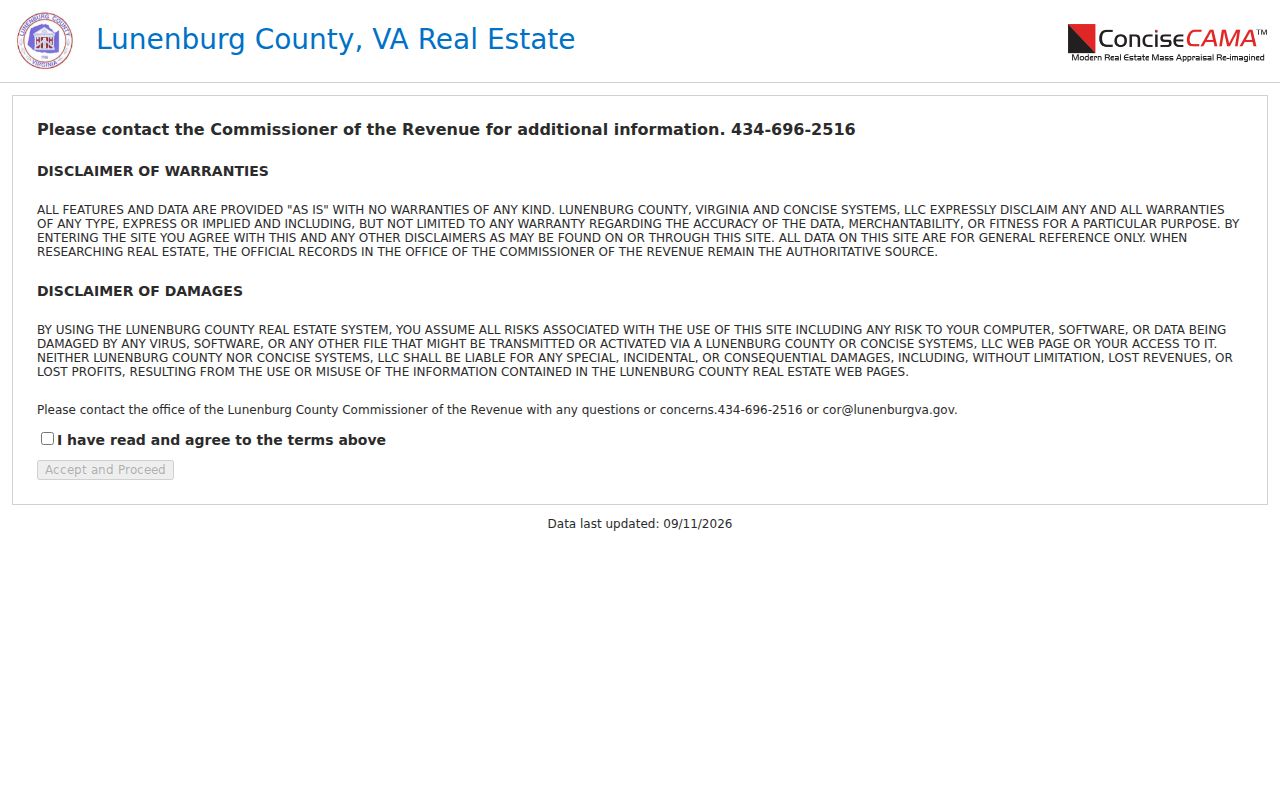
The card image is an interface example only. Read the live field labels for the parcel at hand, and ask the Commissioner to confirm anything unclear.
Lunenburg Map-Book Search
A Lunenburg address search may fail. Turn to the map hierarchy instead of rewording the street name. ConciseCAMA's application exposes controls for map insert, double circle, block, and lot or sub-lot. Each later choice depends on the level before it. Ask the Commissioner for the starting map insert. The local parcel format is not documented publicly.
Once the card opens, copy the identifier exactly as it appears on screen. The Treasurer's help accepts a parcel-number search. The statewide parcel service calls its key PTM_ID, short for Parcel Tax Map ID. These values link systems, but display formats can differ. The map number points to an assessment parcel rather than a surveyed corner or deed boundary.
| Search field | Portal | What to enter or check |
|---|---|---|
| Owner or name | ConciseCAMA | Name text; required format is not stated |
| Address or situs | ConciseCAMA | Street text; rural-name variants may help |
| Map hierarchy | ConciseCAMA | Map insert, double circle, block, lot or sub-lot |
| Tax account key | e-Treasurer | Parcel, name, account, or ticket mode |
The Lunenburg assessment search exposes the map controls after the terms step.
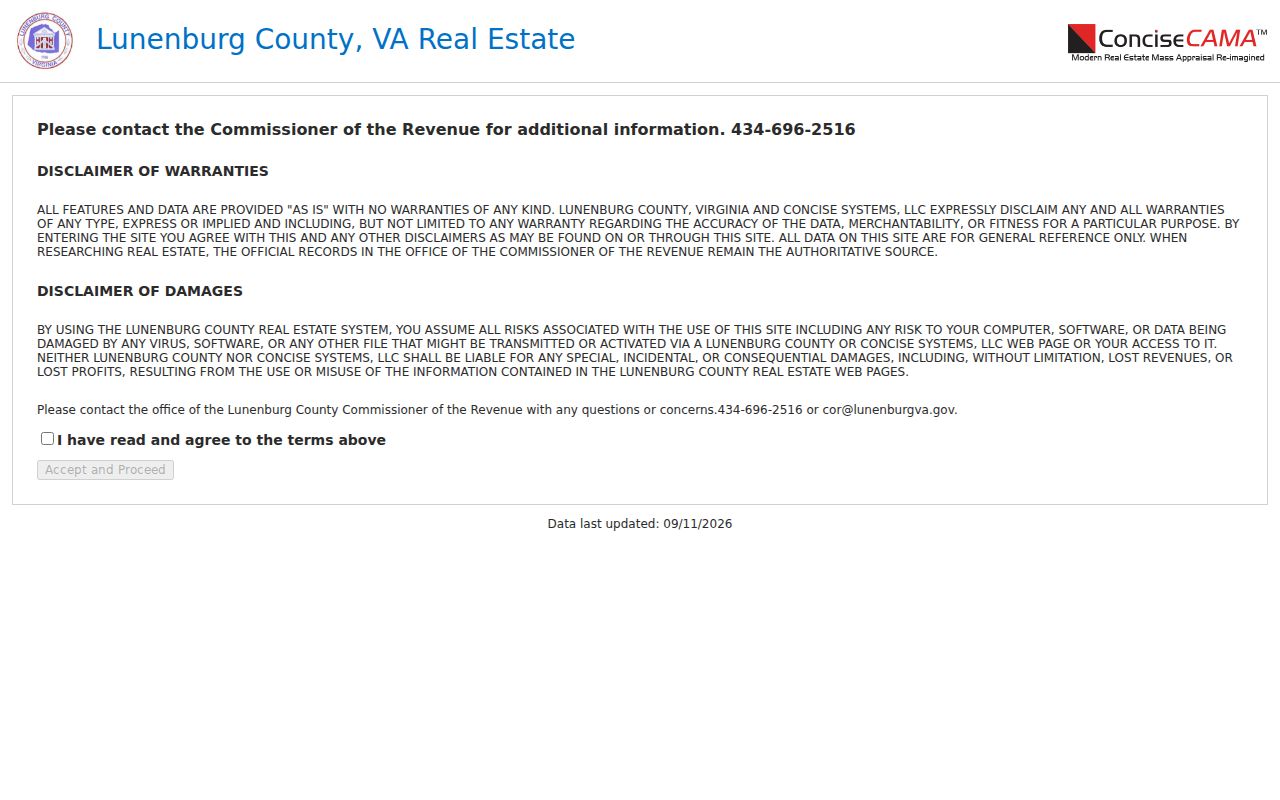
Treat those controls as a county map-book route. If the map key is unclear, send the Commissioner the address and any old parcel reference.
Lunenburg Tax Search Cross-Check
The Treasurer's system is an account and payment route, not a substitute for the assessment card. Its help lists four modes. Department and ticket number, parcel number, name, and account number each open the records differently. A name search may show a selection list first. Paging appears when results overflow one screen.
Reuse the parcel number from ConciseCAMA to cut down on false matches. Compare the map number with the assessment result. Then review the bill or payment history. The checkout adds a 2.25 percent card fee. A payment entry shows an account event, and a payer's name does not establish ownership. The Real Estate Public Inquiry help describes its history and display controls.
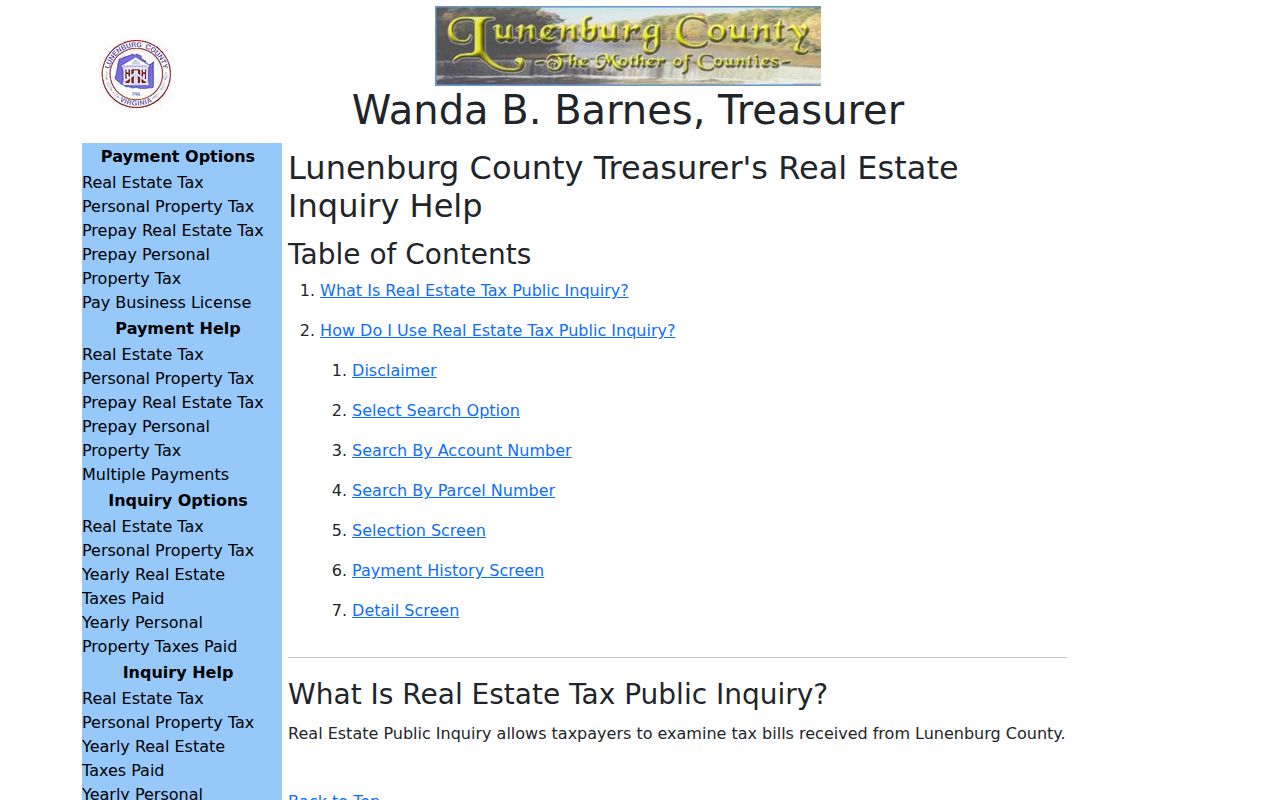
Use the payment-history screen to weigh a tax description against a map number. A parcel can check out this way and still hide a deed problem, since the screen does not certify title.
Rural Address Searches in Lunenburg
Rural Lunenburg often mixes postal labels with political boundaries. A mailing address can say Victoria or Kenbridge. The tract may sit well outside that town's limits. Some post-office names stretch across open country. A deed or plat may even carry an older road name. ConciseCAMA offers no ZIP-wide query. The Treasurer's documented search modes run on parcel, name, account, or ticket instead.
When an address misses, split the street number from the road name if partial matching is available. Try a familiar older road label. Then compare the candidate card's legal description and map key. Confirm any ZIP with USPS. Never read town jurisdiction from a postal address. Near a town line, check the charter or corporate-limit map against the county parcel and zoning source.
Entity Owners in Lunenburg Searches
A Lunenburg assessment card sometimes names an LLC, trust, or estate rather than a person. Life tenants, executors, and administrators appear too. Search punctuation and suffix variants of the entity name. Then pull the related deed and read the vesting language and legal description. "Estate of" may be only a temporary assessment label. A will or probate file can explain who holds authority, but the recorded instrument shows whether the parcel was actually conveyed.
Virginia's SCC Clerk's Information System helps identify a business entity, its registered agent, or its principal office. Those fields explain the company record. They do not prove the entity owns a Lunenburg parcel, so match the entity name and parcel through the deed and assessment systems, and remember that UCC filings cover secured transactions, not real-estate title. The SCC CIS entry page serves both searches.
Treat an entity hit as a lead only. Before relying on it, verify any real-estate interest in the Circuit Clerk's recorded land documents.
Lunenburg Deed Index Search Fields
The deed index shines once an assessment search surfaces a likely owner or map key. Virginia SRA is the remote route. In a grantor-grantee index, the grantor transfers an interest and the grantee receives it. Each role gets its own search. For hands-on work, the Circuit Clerk's courthouse desk remains the local fallback. Search both roles as needed, then narrow by instrument type, recording period, book and page, or parcel reference if the live Lunenburg index exposes that control.
No local notice spells out the exact Lunenburg SRA field set or earliest online year. So ask the Clerk directly. Ask whether the remote index is enabled, whether images require a subscription agreement, how far back the searchable books reach, and whether a courthouse terminal shows more detail. Never assume a cutoff or result cap.
Remote access really asks two questions. Can the index locate a document? And can the image open outside the courthouse? Virginia's SRA notice allows a participating locality to keep its index freely searchable while charging for images under a signed subscription agreement. Lunenburg's public material names no enabled books, fields, or image tiers today. A deed citation is only a lead. It is no substitute for reading the instrument.
Before calling the Clerk, gather the parcel map reference, the likely grantor or grantee, the approximate recording period, and any book and page already known. Ask whether the clerk's terminal reaches older volumes than the remote system. Ask the current copy charge too. No published figure covers ordinary or certified copies, so the right route depends on the actual reference and the Clerk's current access rules.
When a candidate appears, open the recorded image. Compare the legal description against the assessment card. Note the deed reference. A name hit alone can point to another person or another tract entirely.
When a Lunenburg Search Misses
A failed address proves nothing. Plenty of Lunenburg parcels simply hide from that query. The address may use a former road name, or the search may need the map number instead. Many parcels are described by lot, block, or tract. Try the owner name and map hierarchy. Ask the Commissioner for the current assessment key. If a deed is the goal, give the Clerk that key plus any name variants.
Offline records each have a channel. The Circuit Clerk holds deed books and plats. The Commissioner handles assessment corrections, the Treasurer keeps existing account history, and county planning staff field permit and zoning questions. Virginia FOIA can seek existing administrative records, but it cannot force an office to build a search result or title report. State the date range and parcel identifier so staff can find the file.
Choosing a Lunenburg Search Key
Each search key has a job in Lunenburg County. Address search is convenient but can miss a rural road, an older street label, a post-office name, or a town-edge property. Owner search can reveal several parcels. Shared names and legal entities complicate it. A parcel number is the most precise bridge once a county card supplies it.
| Search Key | Best For | Where It Works | Watch Out |
|---|---|---|---|
| Address | Locate one likely assessment card | ConciseCAMA; map reference | Try older road and town-label forms |
| Owner name | Find parcels listed to a person or entity | ConciseCAMA; Treasurer name search; deed index | Check same-name rows and entity variants |
| Map number | Carry one parcel between records | ConciseCAMA, Treasurer, Virginia Parcels | Copy exact punctuation; do not reformat |
Not a title search. A Lunenburg property search leads to public indexes and assessment fields. It does not prove clear title; review the recorded deed and consult a title professional or attorney for a title opinion.